Choosing a Casino Text for Class: Scene, Image, or Story
Choosing a casino text for class gets easier when you match the format to one teachable question and make a clear decision about access, context, and scope.

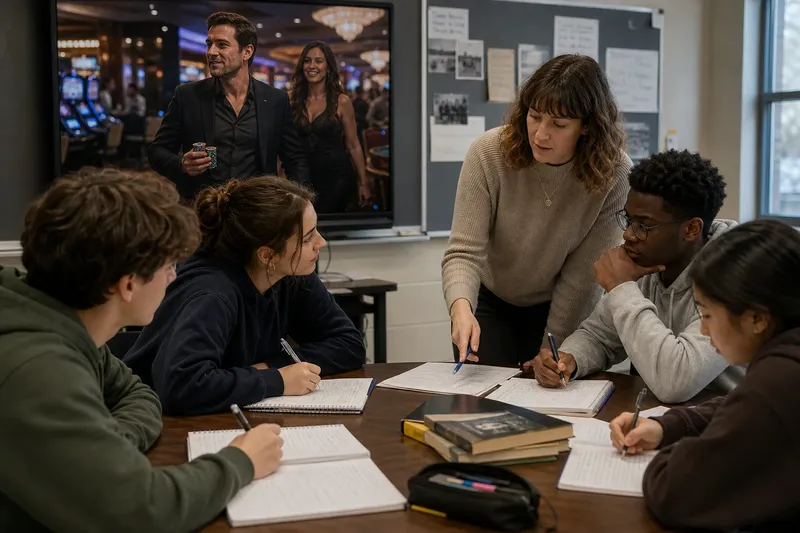
A film scene is paused on your laptop while a printed story and a casino photograph sit beside it. Choosing a casino text for class is easier when you start with the question students will answer, then pick the format that gives them usable evidence.
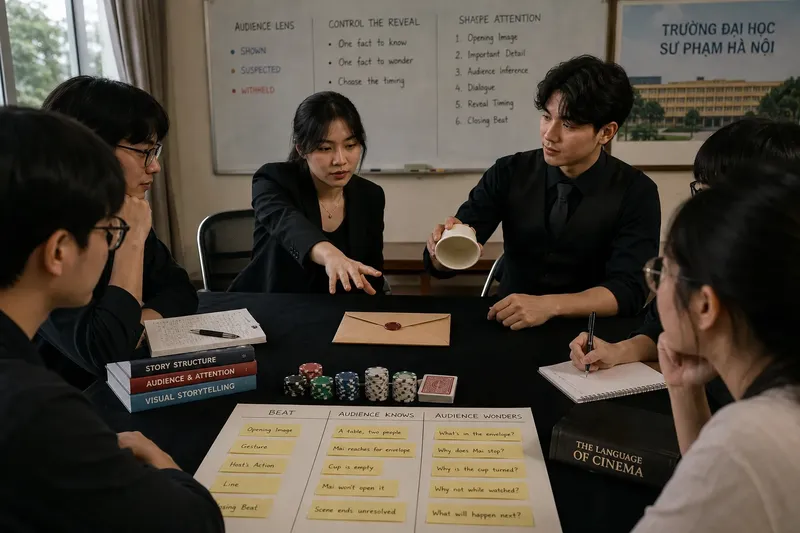
In teacher education at Trường Đại học Sư phạm Hà Nội, this kind of material can support discussion of how stories and images frame a setting. The aim is not to treat a fictional portrayal as a record of real casino life. It is to help future teachers select material with a clear purpose and a manageable scope.
Start with one question
Write a question students can answer by pointing to something in the text. For example: “Whose perspective shapes this scene?” is more workable than “What is casino culture?” The narrower question helps you choose a suitable text and keeps the lesson from drifting into unsupported claims about people outside the classroom.
Decide what students will produce: an annotated passage, a short comparison, or a discussion question for a future class. Keep the task focused on the material. Students can analyze how a text constructs a character without speculating about classmates’ lives or asking anyone to disclose personal experience.
Match format to evidence
A scene offers dialogue, gesture, sound, and changes over time. Choose it if students need to examine interaction or shifting viewpoints. A still image gives everyone the same visual frame to describe, but it cannot establish what happened before or after the moment shown.
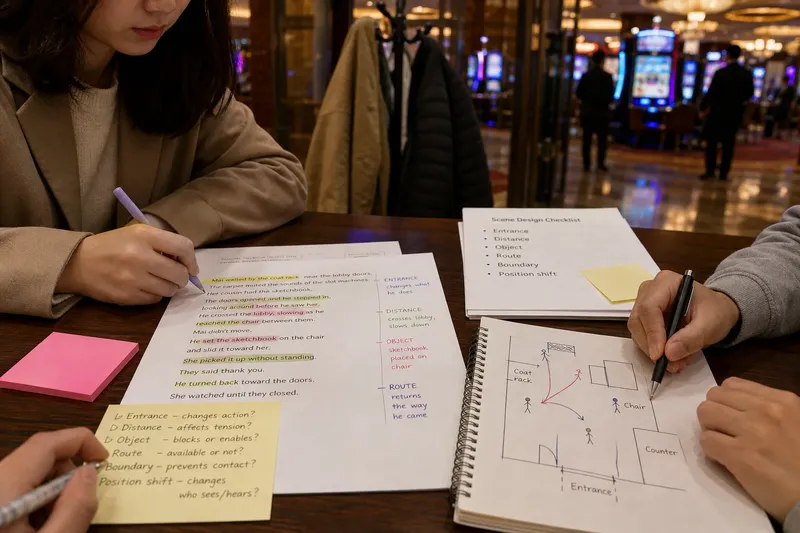
A story extract gives students language and narration to quote. Choose it when the task concerns description, dialogue, or point of view. It cannot supply camera movement or sound unless the writing describes those details. Each format is like a different window: useful for what it shows, limited by what lies beyond its frame.
Use one format when it gives enough evidence for the question. Compare formats only if the comparison itself matters to the learning purpose; otherwise, the extra material can distract from close attention to a single text.
Make the selection
Before class, use these observations to make decisions rather than simply mark boxes:
- Learning question: Check whether students can cite details that answer it. If they can, keep the text; if they cannot, choose a text with more relevant evidence.
- Perspective: Check whose words, actions, or viewpoint appear. If the text supports the intended reading, proceed; if an essential perspective is missing, either name that limit or select another text.
- Access: Check whether students can perceive the details the task depends on, such as readable print, clear images, captions, or audible dialogue. If they can, use that version; if not, provide an accessible alternative or choose different material.
- Background terms: Check whether unfamiliar casino-related language blocks understanding. If a brief neutral explanation will suffice, prepare it; if the mechanics would take over the lesson, choose a less dependent text.
- Sensitive content: Check whether the material includes depictions of gambling that may affect participation. If a specific content note and suitable framing address the concern, prepare them; if not, select a different excerpt or task.
- Permission: Check the source’s license and your institution’s guidance for classroom use. If the terms are clear, follow them; if they are uncertain, consult the appropriate office or choose material with clearer permission.
- Available class time: Check whether students can view or read the selection and complete the response. If they can, keep the planned scope; if not, shorten the excerpt or simplify the task.
What should teachers ask?
How can discussion stay respectful?
Ask students to identify choices in the text, such as a line of dialogue or a detail in the frame. Set a boundary against personal disclosure and claims about all casino visitors.
What if students lack context?
Explain only the terms needed to follow the selected text, using neutral wording. If students would still need substantial background knowledge, choose material that depends less on it.
When is a content note useful?
Use a specific note when the selection includes gambling depictions that could affect comfort or participation. If a note alone would not leave students with a suitable way to take part, offer an alternative text or task.
Should students compare formats?
Compare them when the lesson asks how format shapes representation. If the learning question is narrower, keep one format and give students more time to examine its evidence.
A worked selection
Say a seminar has one short film scene, one printed story extract, and a question about whose perspective shapes a casino conversation. The instructor chooses the film scene as the main text, then asks students to note each speaker and mark which reactions the camera shows. Students produce a list of speakers and a short annotation of visible reactions. If the camera does not show a character’s response, students record that as unknown rather than infer it; the story extract remains available for a later comparison, not a second task that dilutes the lesson.
That choice yields a specific classroom artifact and a clear limit: students can discuss what the scene presents, but not treat it as a complete account of casino life. When choosing a casino text for class, keep the question, the available evidence, and that limit in view. A well-chosen text gives students something precise to interpret—and a reason to notice what it cannot answer.